반응형
unordered_map이란?
- 기존에 익숙한 map과 비슷하지만 정렬되지 않은 해시 기반 컨테이너(이름에서부터 정렬되지 않음을 들어냄)
- Key-Value 쌍으로 데이터를 저장
- Key를 기준으로 해시(hash)를 이용해 빠르게 탐색, 삽입, 삭제가 가능
- 내부적으로 해시 테이블(Hash Table)을 사용
- 원소의 순서를 보장하지 않음. (반복자로 순회 시 삽입 순서로 정렬되어 있지 않음)
- 평균 시간 복잡도
- 탐색(find) : O(1)
- 삽입(insert) : O(1)
- 삭제(delete) : O(1)
기본 사용 예제
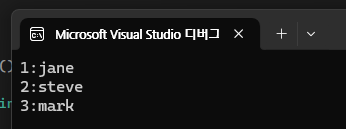
#include <iostream>
#include <unordered_map>

using namespace std;

int main()
{
    unordered_map<int, std::string> unMap;
    unMap.emplace(1, "jane");
    unMap.emplace(2, "steve");
    unMap.emplace(3, "mark");

    for (const auto& pair : unMap)
    {
        std::cout << pair.first << ":" << pair.second << std::endl;
    }
}
주요 함수 정리
- insert()
- 새로운 키-값 쌍 추가
- 이미 존재하는 키면 추가되지 않음
- operator[] (인덱스 연산자)
- myMap[key]로 접근
- Key가 없으면 자동으로 생성 후 초기값(ValueType의 default값)으로 초기화됨
- find()
- Key를 찾으면 해당 iterator 반환
- 만약 못찾으면 myMap.end()를 반환
- count()
- Key가 존재하면 1, 없으면 0을 반환
- erase()
- 해당 Key의 원소를 삭제
- size()
- 원소 개수를 반환
- clear()
- 모든 원소를 삭제
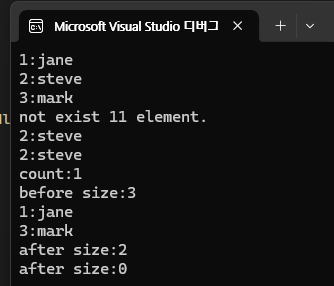
주요 함수들 사용 예제
#include <iostream>
#include <unordered_map>

using namespace std;

int main()
{
    unordered_map<int, std::string> unMap;

    // insert() 함수
    unMap.insert({11, "mike"});
    unMap.insert(std::make_pair(33, "jordan"));

    unMap[3] = "jane";
    unMap[5] = "ordin";

    unMap.emplace(4, "april");
    unMap.emplace(7, "sath");

    // 순회하기
    for (const auto& pair : unMap)
    {
        std::cout << pair.first << ":" << pair.second << std::endl;
    }

    // find() 함수
    auto target = unMap.find(11);
    if (target == unMap.end())
    {
        std::cout << "not exist 11 element." << std::endl;
    }

    // find() 함수
    auto target1 = unMap.find(2);
    if (target1 == unMap.end())
    {
        std::cout << "not exist 2 element." << std::endl;
    }
    else
    {
        std::cout << (*target1).first << ":" << (*target1).second << std::endl;
        std::cout << target1->first << ":" << target1->second << std::endl;
    }

    // count() 함수
    auto result = unMap.count(3);
    std::cout << "count:" << result << std::endl;

    std::cout << "before size:" << unMap.size() << std::endl;

    // erase() 함수
    unMap.erase(2);

    for (const auto& pair : unMap)
    {
        std::cout << pair.first << ":" << pair.second << std::endl;
    }

    std::cout << "after size:" << unMap.size() << std::endl;

    // clear()
    unMap.clear();

    std::cout << "after size:" << unMap.size() << std::endl;
}
operator[](인덱스 연산자) 더 알아보기
- 존재하지 않는 Key를 쓰면 자동으로 해당 Key로 생성된다.
- 이미 존재하는 Key라면 기존 원소를 덮어쓴다.
- 있으면 수정, 없으면 추가할 때 유용하게 사용이 가
#include <unordered_map>
#include <string>

std::unordered_map<std::string, int> myMap;
myMap["apple"] = 100;          // 추가
myMap["apple"] += 50;          // 값 덮어쓰기
insert() 함수 더 알아보기
- Key가 존재하지 않을때만 추가됨
- Key가 이미 존재하면 아무 변화 없음
- 반환값으로 pair<iterator, bool>를 반환 (insert 성공유무를 확인 가능)
#include <iostream>
#include <unordered_map>
#include <string>

std::unordered_map<std::string, int> myMap;
auto result = myMap.insert({"apple", 100});
if (result.second) {
    std::cout << "삽입 성공!" << std::endl;
} else {
    std::cout << "이미 존재하는 key입니다." << std::endl;
}
emplace() 함수 더 알아보기
- insert와 동일하게 존재하지 않을 때만 추가
- 생성 비용을 절약할 수 있음
- 객체를 pair로 만든 뒤 삽입하지 않고, 컨테이너 내부에서 직접 생성
myMap.emplace("apple", 10);인덱스 연산자 vs insert vs emplace 비교표
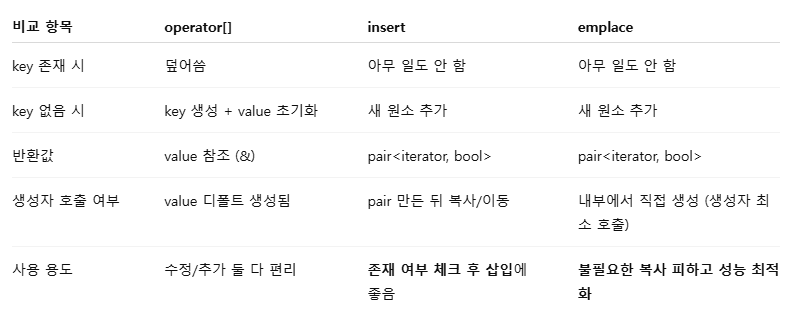
정리하자면
- C++에서 제공하는 unordered_map은 정렬이 필요하지 않은 데이터를 저장할 수 있는 컨테이너
- 기존 map과 비교해서 검색, 삽입, 삭제가 더 빠르다.
- 추가 시 어떤 함수를 써야 하나?
- 없으면 넣고 있으면 덮어쓰고 싶다 : operator[] (인덱스 연산자)
- 없을 때만 넣고 싶다 : insert()
- 없을 때만 넣고, 생성 비용 최적화를 하고 싶다 : emplace()
'프로그래밍 > C++' 카테고리의 다른 글
| C++ push_back()과 emplace_back() 차이 (0) | 2025.10.07 |
|---|---|
| C++ std::map, std::unordered_map 사용시 erase 단순화하기 (0) | 2025.09.22 |
| 비주얼 스튜디오 2022(Visual Studio 2022)에서 C++ 언어 표준 변경하기 (0) | 2025.07.01 |
| C++ 소켓 프로그래밍(Socket Programming) 에코 클라이언트 (0) | 2024.07.31 |
| C++ 소켓 프로그래밍(Socket Programming) 에코 서버 (0) | 2024.07.31 |


댓글